
How AI Tools Are Changing Work in 2026 (And Why Everyone Is Adapting Fast)
IntroductionA few years ago, AI tools felt experimental.Today, they are becoming part of everyday work.From writing emails and generating code to automating workflows and analyzing
Introduction
A few years ago, AI tools felt experimental.
Today, they are becoming part of everyday work.
From writing emails and generating code to automating workflows and analyzing data, AI tools are quietly changing how people work across almost every industry.
And in 2026, this shift is accelerating faster than ever.
The conversation is no longer:
“Should we use AI?”
Now it’s:
“How fast can we adapt to it?”
AI Is Moving Beyond Chatbots
The biggest change happening right now is that AI is evolving from simple assistants into systems that can actually execute tasks.
Modern AI tools can:
- Write content
- Analyze spreadsheets
- Generate code
- Automate workflows
- Create presentations
- Summarize meetings
- Assist with research
Many AI platforms are now moving toward “agentic AI,” where AI systems can complete multi-step workflows with minimal human input
This is fundamentally changing how companies think about productivity.
Why Businesses Are Investing Heavily in AI
Businesses are adopting AI because it saves time and reduces repetitive work.
Instead of spending hours on manual tasks, teams are using AI tools to:
- Draft reports
- Automate support tickets
- Organize data
- Improve customer communication
- Speed up software development
AI is increasingly being integrated directly into business infrastructure instead of being treated as an optional add-on
This is why AI adoption is growing across startups, enterprises, and even government organizations.

AI Coding Tools Are Reshaping Development
One of the industries changing fastest is software development.
AI coding assistants are now capable of:
- Autocompleting code
- Detecting bugs
- Explaining logic
- Refactoring projects
- Generating documentation
Some companies now report that large portions of their codebase are AI-assisted.
Instead of replacing developers, AI is helping engineers focus more on architecture, logic, and decision-making.
This shift is creating a new style of development where humans increasingly supervise AI-generated workflows.
AI Automation Is Becoming Mainstream
Workflow automation used to require large technical setups.
Now AI tools are simplifying automation dramatically.
Modern platforms can connect:
- Emails
- Databases
- CRMs
- Project management tools
- Marketing systems
AI automation tools are helping companies reduce repetitive work and improve operational efficiency.
For many businesses, AI is becoming less about experimentation and more about operational necessity.
The Rise of AI Agents
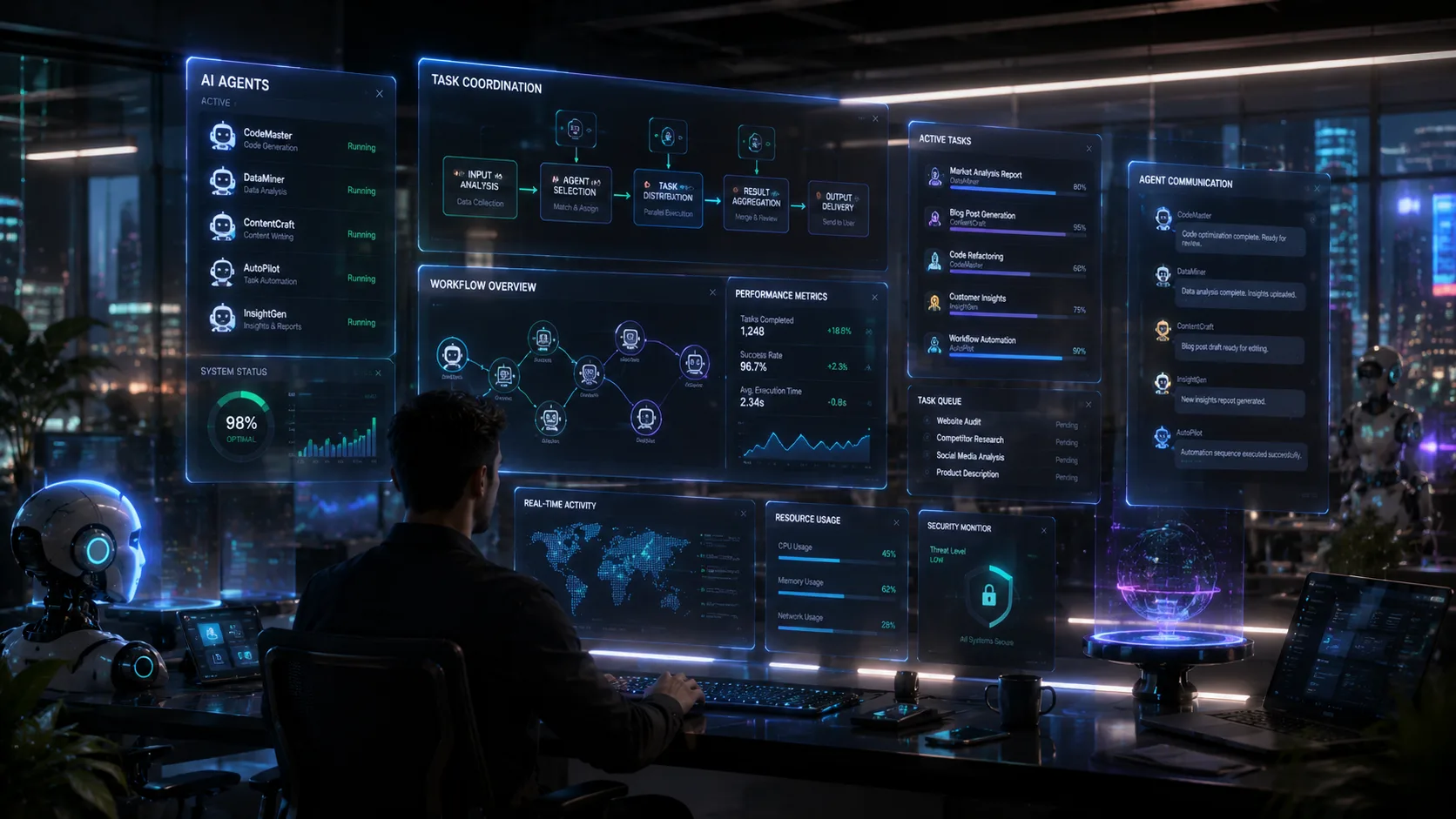
One of the biggest trends in 2026 is the rise of AI agents.
Unlike traditional AI chatbots, AI agents can:
- Plan tasks
- Execute workflows
- Use external tools
- Make decisions based on goals
This creates the possibility of “digital workers” that can handle repetitive operational tasks
Many experts believe this will become one of the biggest shifts in workplace technology over the next decade.
But AI Is Also Changing Jobs
Not every impact of AI is simple.
Some industries are seeing major changes in job structures as AI tools automate repetitive tasks.
Administrative roles, support operations, and routine digital workflows are particularly affected.
At the same time, entirely new roles are emerging:
- AI workflow managers
- Prompt engineers
- AI automation specialists
- AI operations teams
This means adaptation and upskilling are becoming increasingly important.
The Human Side Still Matters
Despite all the automation, human skills are still extremely valuable.
AI tools are powerful, but they still struggle with:
- Creativity
- Emotional intelligence
- Strategic judgment
- Complex decision-making
Most companies are discovering that the best results come from combining AI efficiency with human oversight.
Even organizations rapidly adopting AI continue emphasizing the importance of people and workflow adaptation
What Happens Next?
AI tools are evolving rapidly.
Over the next few years, we will likely see:
- More autonomous AI agents
- AI-native businesses
- Smarter workflow automation
- Industry-specific AI systems
The future of work is not fully automated.
It’s AI-assisted.
And the people learning how to work effectively with AI today may have a significant advantage tomorrow.
Final Thoughts
AI tools are no longer just productivity experiments.
They are becoming part of how modern work actually happens.
From coding and automation to communication and research, AI is reshaping workflows across industries at an incredible pace.
The biggest shift isn’t simply technological.
It’s cultural.
Because the future of work is increasingly about humans and AI working together.
Frequently Asked Questions
What are AI tools?
AI tools are software platforms that use artificial intelligence to automate tasks, generate content, analyze information, and improve productivity.
How are AI tools changing work?
AI tools are helping businesses automate repetitive tasks, improve efficiency, accelerate development, and simplify workflows.
Will AI replace jobs completely?
Most experts believe AI will transform jobs rather than fully replace them. Many repetitive tasks may become automated, while new AI-related roles continue emerging.
What industries are using AI the most?
AI is rapidly growing in:
- Software development
- Marketing
- Customer support
- Healthcare
- Finance
- Business automation
What is Agentic AI?
Agentic AI refers to AI systems capable of planning, reasoning, and executing tasks autonomously instead of only responding to prompts.